
 English
 German
 French
 Italian
For the 2026/27 season, FIS requires certified cut-resistant pants at every FIS Alpine Skiing event, from the World Cup down to FIS races and FIS Masters. If you race outside the FIS calendar, your national federation or the event organizer sets the rule.
We make cut-resistant base layers, and our founder, Victor Wiacek, worked with FIS to create the test behind the star ratings. So this rule comes up in a lot of our conversations with racers, parents, and coaches. Below are the answers we give most often: what the rule requires, what changed this season, and how to check a pair before race day.
What Is the FIS Cut-Resistant Mandate?
The 2026/27 FIS Alpine Equipment Specifications make cut-resistant undergarment pants mandatory for "all FIS Alpine Skiing events." To count, a pair needs three things:
- At least a 3-star FIS rating under the FIS-DITF 2021 test. An EN388 or ANSI cut rating on its own doesn't qualify.
- Continuous certified protection everywhere between the iliac crest (the top of your hip bone) and the top of your ski boot.
- A non-removable conformity label on the back of the lower left leg, above the boot cuff, showing the CRG 2021 conformity statement and the star level.
That's the whole requirement. Cut-resistant shirts and full-body suits are strongly recommended by FIS, but not required.
What Changed for 2026/27?
If you knew the rule last season, the star threshold didn't change. The scope did.
| Season | FIS requirement |
|---|---|
| 2025/26 | Minimum 3-star pants were mandatory at race Levels 0 and 1. Cut-resistant undergarments were strongly recommended at all other FIS levels. |
| 2026/27 | Minimum 3-star pants are mandatory at every FIS Alpine Skiing event, including Level 2+ races and FIS Masters. Shirts and full-body suits remain strongly recommended. |
So if you race FIS Level 2+ or FIS Masters, this is your first season under the rule. You can compare the wording yourself in the 2025/26 specification and the 2026/27 specification.
Why Cut Protection Matters
Ski-edge cuts get less research attention than knee or head injuries, and nobody knows yet how often they really happen. What's published shows how bad they can be.
A survey of U.S. racers aged 10–24 reported a 6.8% laceration rate during the 2018/19 season. A peer-reviewed case series of five severe racer lacerations documented damage to muscle, nerves, blood vessels, joints, and bone.
In January 2024, Aleksander Aamodt Kilde crashed in the Wengen downhill and his ski cut deep into his calf. His recovery included emergency surgery and sepsis. Reuters covered his injury and the sport's safety response in January 2026.
This is personal for us. In 2019, Victor fell on his own ski in a GS race, nicked his femoral artery, and lost half the blood in his body before help arrived. VIX started there.
Cut-resistant clothing lowers the risk. It doesn't remove it.
Who Does This Affect?
FIS Alpine Events
If the race is on the FIS Alpine calendar, the rule applies:
- Level 0: World Cup, World Championships, Olympic Winter Games
- Level 1: Continental Cups (Europa Cup, NorAm, etc.), Junior World Championships
- Level 2+: FIS races, including national and regional events listed on the FIS calendar
- FIS Masters: FIS Masters Cup, FIS Masters World Championships, and other FIS Masters events
Club, Youth, and Recreational Racing
The FIS rule doesn't automatically cover a club race, academy race, national age-class event, or a day of recreational skiing. For those, your national federation and the event organizer decide.
A few federations already go further than FIS:
- France: The French Ski Federation (FFS) makes minimum 3-star cut-resistant tights mandatory from U12 upward for 2026/27, in competition and training. Promotion races are listed separately as "strongly recommended," so check that event's rules.
- Italy: The Italian Winter Sports Federation (FISI) requires minimum 3-star cut-resistant pants for all categories at national, regional, and provincial races in 2026/27, and in training.
- United States and elsewhere: We checked current official materials for the U.S., Canada, Austria, Switzerland, Germany, Norway, Sweden, Finland, the United Kingdom, Australia, and New Zealand and didn't find a blanket national rule for non-FIS racing. A regional series, club, academy, or organizer can still set its own, so read the event notice.
Understanding FIS Star Ratings
FIS rates cut resistance from 1 to 5 stars. More stars means the fabric held up against more cutting force in a standardized test.
| Rating | Force Required | What It Means |
|---|---|---|
| 1 Star | 100N | Below mandate minimum |
| 2 Stars | 200N | Below mandate minimum |
| 3 Stars | 300N | Mandate minimum |
| 4 Stars | 400N | Above minimum |
| 5 Stars | 500N | Maximum available |
The FIS-DITF 2021 test cuts the fabric in three directions and rates it by the weakest one. Four of five samples have to pass at a star's force level to earn it. The full parameters are in §3.5.3.3 of the FIS specification, and our FIS Star Ratings guide walks through the method in plain language.
Is 3 Stars Enough, or Should I Get 5?
A correctly labeled 3-star pair with the required coverage meets the mandate, and we're not going to tell you it isn't good enough. It passed the same FIS test at 300N.
A 5-star pair passed that test at 500N, the top of the scale. That extra margin is what you're paying for, along with whatever differences in fit and comfort you notice.
We sell 5-star, so weigh that. But the pair that fits well enough to wear every day will protect you more than the one that stays in your bag.
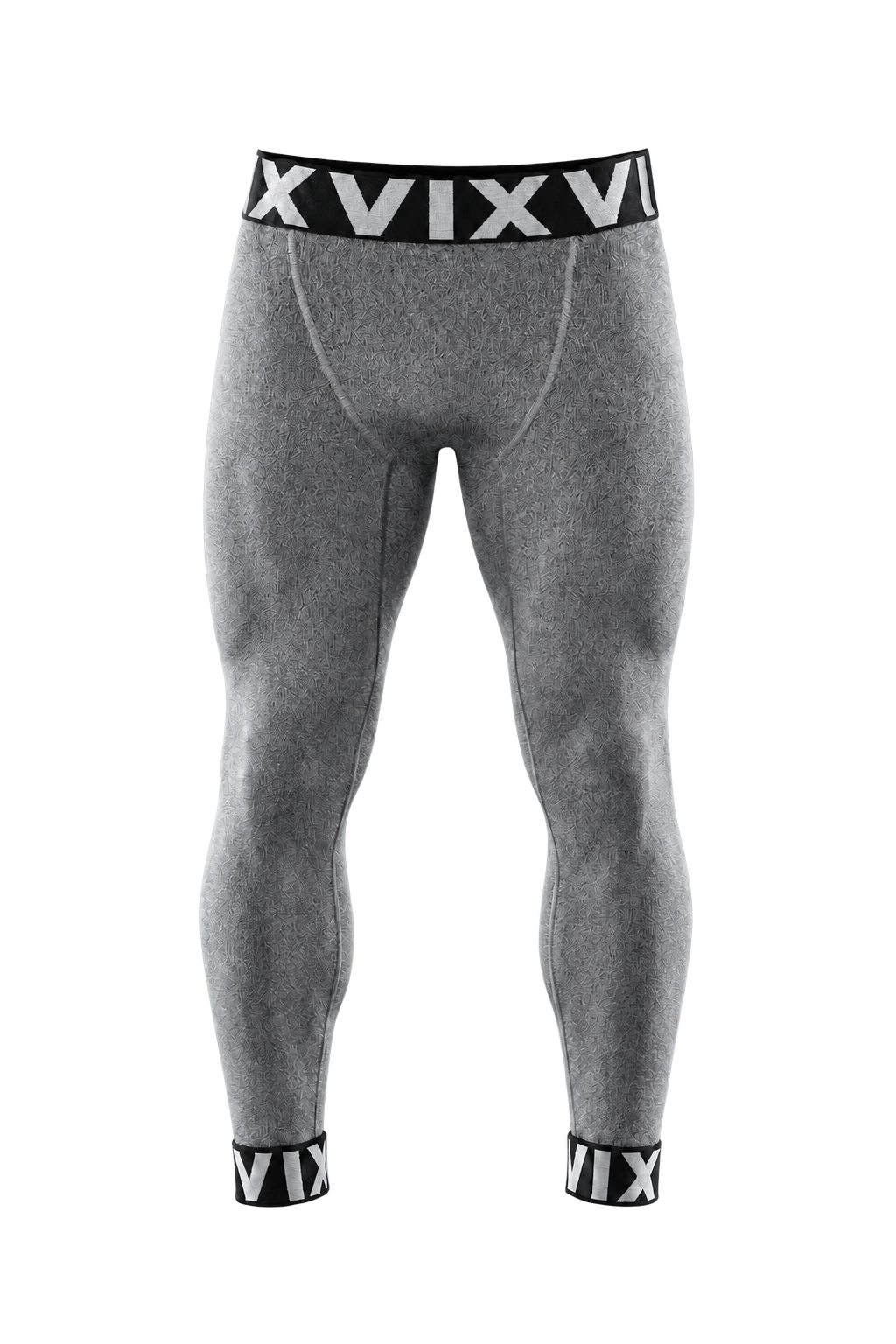
Meet VIX
What the World Cup wears.
75% of World Cup racers wore VIX in 2025/26, and VIX was the first brand to earn FIS 5-star certification. Comfort Pro is that same protection, built to feel like a regular base layer, because protection only works on the days you wear it.
Victor spent years testing fabrics to make the pair he wanted to ski in himself. He still never skis without it.
How to Check a Pair Before You Buy
Every compliant pair meets the same minimum, but they still differ in rating, fit, comfort, and price. Whichever brand you're looking at, trust the label on the garment over the product page:
- Find the non-removable conformity label on the back of the lower left leg.
- Look for at least three stars and the wording "Conforms to FIS Specifications CRG 2021."
- Confirm the certified protection is continuous from the iliac crest to the top of the boot.

Want to compare specific pairs? Our side-by-side product comparison lists ratings and approximate U.S. prices. Prices change, so check the linked product pages before you buy.
Common Questions
Can I use pants certified to EN388 or another standard?
Not for this rule. An EN388 or ANSI rating doesn't establish FIS compliance. The garment needs the FIS CRG 2021 conformity label, at least three stars, and the required coverage.
Do I need cut protection for training?
FIS sets the race-day rule. Training rules come from your team, club, or national federation. France and Italy explicitly include training in the documents cited above. Ask your coach before the season starts.
What happens if I arrive without compliant pants?
Officials can check the conformity label at equipment control, and the event's rules decide what happens next. It's not something you want to sort out on race morning. For non-FIS events, check the organizer's event notice or competition guide.
My kid is still growing. What should we buy?
Start with the rule and the fit. A correctly sized, labeled 3-star pair meets the FIS minimum. Our parent's guide to cut-resistant ski gear covers when to buy and how to size a growing racer.
Do I need upper body protection too?
It's not required. FIS strongly recommends cut-resistant shirts and full-body suits. VIX doesn't make tops or neck protection yet, but they're in development, and you can join the waitlist to hear first.
Before Your First Race
Check your event's rules and the label on your pants. Then give yourself time to get the fit right. VIX fabric feels firmer when new, so wear your pair in training before race week. Our sizing guide helps if you're between sizes.
For more on how the materials work, see our Complete Guide to Cut-Resistant Ski Base Layers. Not racing? We also cover cut protection for recreational skiers.
If a teammate or someone on your club's parent list is still asking about the new rule, send them this page. And if you have questions about a label or fit, email us at info@vixprotection.com. We're happy to help, whether you end up buying VIX or not.
Know the rule. Find your pair.
Explore VIX’s 5-star cut-resistant leggings, or grab the free guide to keep the rules and pre-season checklist handy.
Shop VIX leggings ↗Official Sources
Rules and documents reviewed as of this article's last update:
- FIS, Specifications for Alpine Competition Equipment 2026/27, §§3.5.3.2–3.5.3.4, pp. 31–32.
- FIS, Specifications for Alpine Competition Equipment 2025/26, §3.5.3.4, p. 30.
- FFS, Équipements FIS et FFS, "Collant cut resistant," p. 3.
- FISI, Agenda degli Sport Invernali - Sci Alpino 2025/26, §3.0.9, pp. 7–8 (the published transition to the 2026/27 three-star minimum).
- Bielmeier and Man, survey of U.S. adolescent and young-adult racers, 2018/19 season.
- Severe Lacerations in Alpine Ski Racing: A Case Series and Review of the Literature.